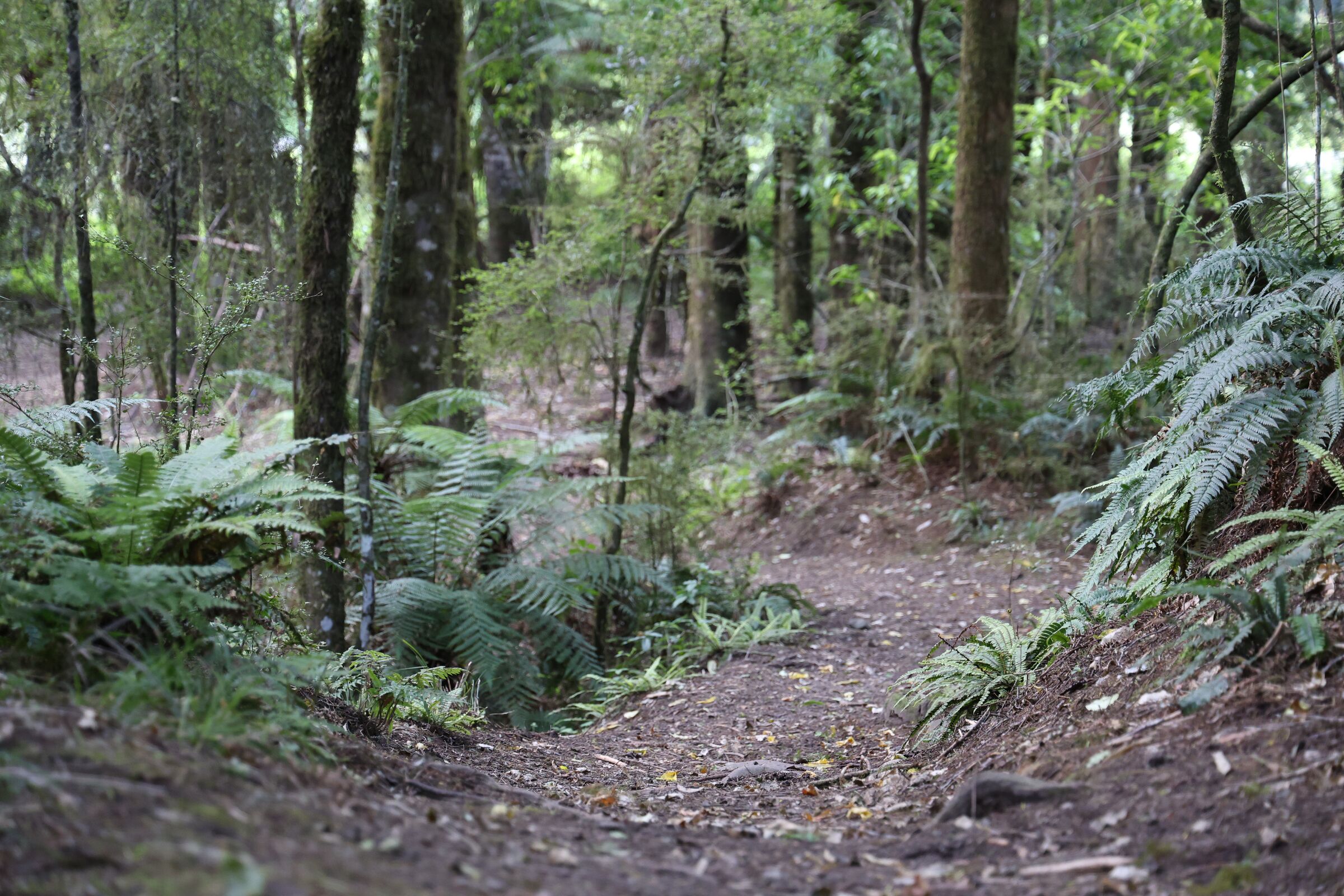
A track through the bush in the Waimana valley

Te Urewera/Connection

Be Safe

Come prepared to this nahere. Conditions change quickly and support may be far away.

Visiting Te Urewera

Whether you are tanata whenua returning home or arriving here for the first time, you belong.

Te Urewera is home to many folds of time, people, creatures, ideas and dreams. For Tūhoe it is identity and belonging.

Come prepared to this nahere. Te Urewera is remote. Conditions change quickly and support may be far away. Good judgement, preparation and awareness are as important as the gear you carry.

Know the area you are entering. Plan your trip. Carry what you need. Move with respect for the whenua, the nahere and the people around you. Respect for the whenua is a gift you give yourself. Leave Te Urewera better than you found it so that together, we may enjoy her bounty forever.

Tell someone your planLeave your trip details with someone you trust. There is little mobile coverage through most of Te Urewera. If something goes wrong, what brings help is someone knowing where you went and when you said you would be back.
Get your permit firstHunting in Te Urewera requires a permit. Hunting with pig dogs requires a separate permit. Hold the correct one before you arrive. We check.

News alerts | Preparedness

Conditions here change quickly.

Check weather, road conditions, incidents and closures before you travel. Most of how a trip goes is decided before you leave home.

Weather

Fine turns cold, wet and windy in a short time. Rivers rise. Visibility closes in. Check the forecast, then prepare for it to be wrong. Carry the clothing, food and equipment the season and the country require, not what the forecast promised.

Incidents

Your safety is yours to carry. Carry the right gear. Know your route. Consider a Personal Locator Beacon. If something goes wrong, stay calm, assess, and act deliberately. Help may be a long way off, and in remote country it takes time.

Closures

A closure means there is a hazard: flooding, slips, fallen trees, damaged structures, and risks you will not see until you are standing in them. Closures are not advice and they are not there to inconvenience you. Turn around.

Live alerts · current incidents and closures will list here, managed in the website admin.
Live weather on windy.com

Incident reporting

Incident report form · built in the WordPress phase: incident type, where and when, description, photos, optional contact details, routed to the right recipient. In an emergency call 111.

Hunters | Gatherers

“Opportunities flow from meeting our obligations and responsibilities”.

Hunting and gathering in Te Urewera exist to serve the forest.

That is the order of it. Hunting is one of the ways the forest is kept in balance. What is taken, when it is taken, and how much, these are decided by what the nahere can carry, not by what the hunter wants.

Like humans, introduced animals eat this forest. They take the young trees before they can stand, strip the understorey, and empty the ground of what the birds and the insects depend on. A forest can be full of green and still be failing. Hunting answers that. Done well, it is work on behalf of the nahere and the wai.

Gathering follows the same measure. Take what the place can give up without being diminished. Leave the source stronger than the take. Some things are not available at all, and knowing which is part of belonging here.

Kai matters. Whānau are fed from this whenua and always have been. But the reasoning runs one way: the people are sustained so that the people can sustain the forest. Kai, knowledge, skill and the passing of these to the next generation are what keep tanata whenua present and capable. A forest with no one able to work it is not protected. Provision and protection are the same obligation seen from two ends.

What is asked of hunters here

  • know what the forest needs before you decide what you want
  • take the animals that cost the nahere, and take them cleanly
  • respect the whenua, respect other hunters, and leave something for those who follow
  • carry out what you carry in, and carry out what you take
  • come back knowing more about this place than when you arrived

None of this is a restriction, rather a reason that hunting is welcome.

Hunting and taking is earned by responsible conduct, and that continues for as long as that responsibility continues.
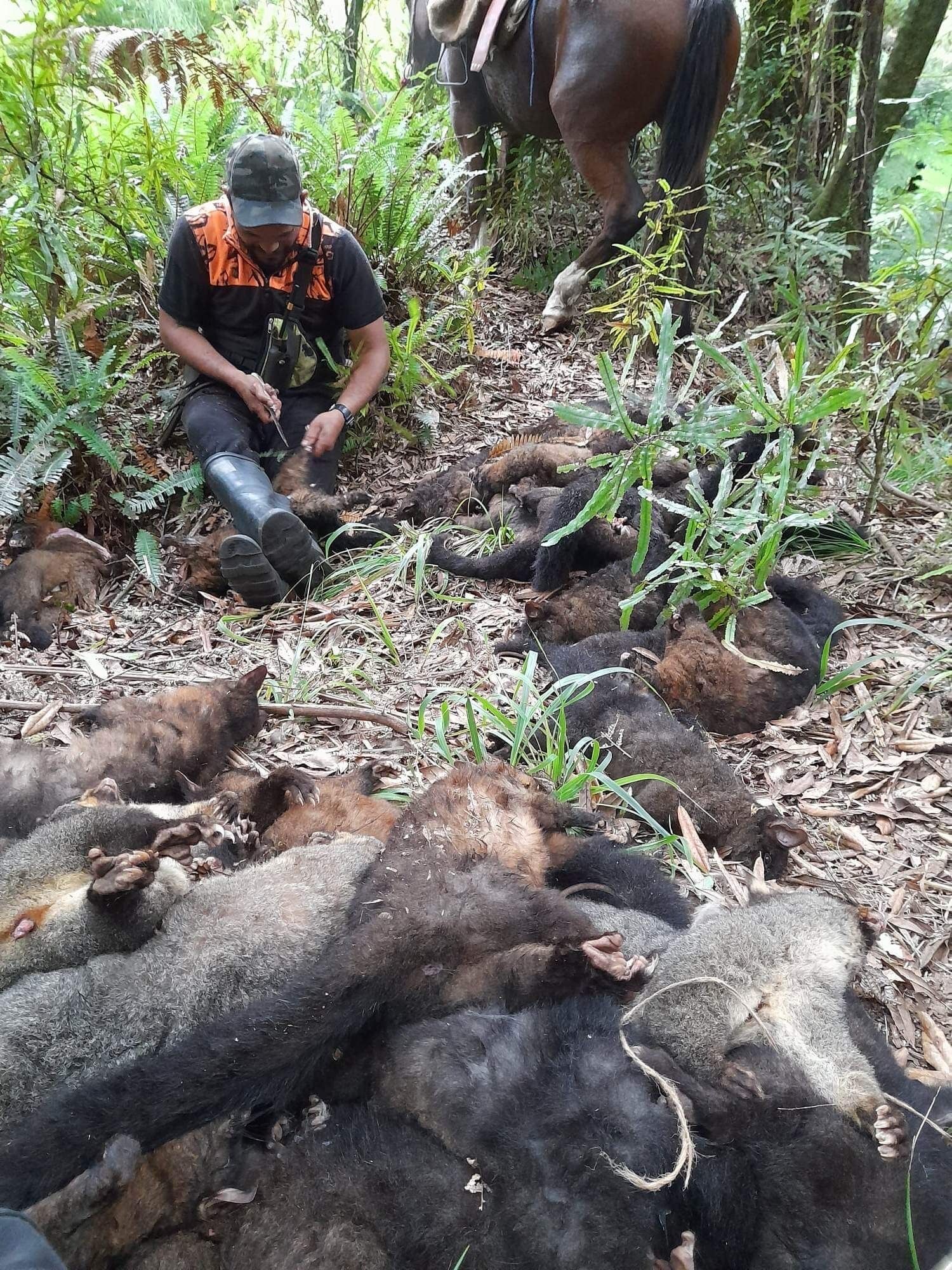
A kaitoro at work in the nahere
Hands and feet in the nahere · photo to be confirmed by TUT

Permits

Apply for your hunting permit before entering Te Urewera. Permits are issued for four months from the date of application and will be sent directly to you. Not all areas are open to hunting. Restrictions apply. Your permit identifies where hunting is permitted and where it is not. Understand these conditions before you head out.

Hunters using pig dogs must follow the separate pig dog permit process.

Te Urewera Board supports hunting practices that are safe, responsible and consistent with the wellbeing of Te Urewera.

Your responsibilities

  • Know where hunting is permitted.
  • Respect closed areas and no-hunting zones.
  • Carry and understand the Te Urewera hunting maps.
  • Seek local knowledge where it will improve safety.
  • Always carry your permit.
Hunting application form
Online form · TUT needs a fillable permit form with an emailed confirmation, exports for reporting, and a warranted-officer view of current permit holders. Built in the next phase.

Hunting areas & maps

In Te Urewera, you are responsible for knowing where you stand. This is a remote and shifting landscape. Tracks fade, conditions change, and not everything is marked.

Carry the right maps and know how to use them. Do not rely on chance or assumption. Move with awareness of the whenua and the boundaries around you. Good navigation is part of good judgement. Plan your route, know your limits, and respect the lay of the land.

Practical guidance

  • Carry a paper map
  • Use GPS as a backup
  • Know boundaries and access points
  • Expect limited or no mobile coverage
  • Mark your entry and exit locations
  • Allow extra time for travel

Come prepared. Stay aware.

Te Urewera hunting maps

Firearms & safety

A firearm demands discipline, awareness and control.

You are responsible for your actions at all times. Poor decisions place yourself, other hunters and the nahere at risk. Know the rules. Handle firearms safely. Stay alert.

Hunters bringing firearms into Te Urewera must comply with the Arms Act 1983.

Hunters wishing to use a firearm in Te Urewera must abide by the conditions of the Arms Act 1983. The New Zealand Police and the New Zealand Mountain Safety Council provide the Arms Code for the safe use of your firearm. Please observe these rules when hunting in Te Urewera:

  1. Treat every firearm as loaded
  2. Always point firearms in a safe direction
  3. Load a firearm only when ready to fire
  4. Identify your target beyond all doubt
  5. Check your firing zone
  6. Store firearms and ammunition safely
  7. Avoid alcohol or drugs when handling firearms

See the Arms Code for more information on the safe use of your firearm.

Here is the kawa for hunting with bows and crossbows.

Bow hunting

  • Minimum drawing weight factor 35lb / 15kg
  • Minimum diameter of multi-bladed head is 7/8″ or 22mm and they must be kept sharp
  • Arrows with any poison, explosive or other chemical substance on or in the head or shaft are not permitted.

Crossbow hunting

  • Minimum drawing weight factor 150lb / 68kg
  • Minimum diameter of multi-bladed head is 7/8″ or 22mm and they must be kept sharp
  • Minimum length of complete arrow is 16″ or 400mm
  • Hunting arrows must not be placed into a loaded crossbow under any circumstances unless target is located. Crossbow must have a positive mechanical safety device in working order.
  • Arrows with any poison, explosive or other chemical substance on or in the head or shaft are not permitted.

Pig dogs

Access to Te Urewera with pig dogs is a privilege, not a right.

The use of dogs carries additional responsibilities. Dogs can pose a serious risk to kiwi and other ground-dwelling birds, and lost dogs can become a long-term problem for Te Urewera.

Only pig dogs are permitted, and only under the conditions set by Te Urewera Board. Every dog brought into Te Urewera must be accounted for when it leaves. These conditions help protect the nahere while allowing hunters to contribute to pig control.

Before applying for a permit, make sure you understand the season dates, permit requirements and your responsibilities as a dog owner.

Pig dog season

The pig dog season in Te Urewera runs from 1 May to the Friday before Labour Weekend. A map of approved pig dog hunting areas can be viewed here.

Applying for a pig dog permit

  • Pig dog permits must be obtained in person.
  • Each dog must be presented to an issuing officer so the brand or tattoo can be checked and recorded.
  • Bookings are essential before visiting either office.
Te Uru Taumatua12 Tūhoe Street, Tāneatua
Phone: (07) 312 9659
Monday to Friday, 8.30am to 3.00pm
Te Kura Whenua6249 Lake Road, SH38, Te Urewera
Phone: (06) 837 3987
  • Dogs must be branded or tattooed with a readable identification number.
  • A current Kiwi Aversion Training certificate is required.
  • Only genuine pig dogs are permitted.
  • Permit holders are responsible for ensuring all dogs return home.
  • Lost dogs must be reported immediately
  1. Only genuine pigdogs are permitted. Deer indicating or other hunting dogs are not permitted.
  2. Dogs must be branded or tattooed with at least one readable number.
  3. Brands or tattoos need to be inspected for the first permit of the year.
  4. Dogs must have completed Kiwi Aversion Training. A current certificate must be sighted.
  5. Maximum number of dogs being hunted together is 3 per hunter or party.
  6. Dogs must be tied up when not being hunted, more than 50m from any hut and 25m from any track.
  7. Lost dogs must be immediately reported to the permit issuing office.
  8. Guide dogs are permitted for the aid of the blind, and Disability Assist dogs for those with mobility difficulties. Disability Assist dogs must be certified according to Department of Internal Affairs criteria.
  9. This permit must be carried by the holder at all times and produced on demand to any authorised person.
  10. The owner of any dog which persistently barks at or otherwise annoys, bites or menaces other visitors must remove that dog from Te Urewera when asked to do so by any authorised person.
  11. Any dog which is at large with no known owner and which will not allow itself to be caught will be destroyed.
  12. Any dog which is at large with no known owner and which can be caught will be handed over to the local authority pound.
  13. Any person who takes a dog into Te Urewera without authority may be prosecuted.
  14. Any other pigdogs taken into Te Urewera other than on this permit require a new permit.
  15. This permit does not automatically confer a right of access over any private land except by way of land-owner permission, defined legal roads or rights of way.
  16. Carcasses and offal must not be left near or in visitor facilities or waterways.
  17. Breach of any of the standard or special conditions renders this permit null and void and may result in prosecution.

The single-most important thing you should do is ensure all of your dogs return home, and any lost dog is promptly reported to the permit issuing office. Failure to report lost dogs may result in no further permits being issued to the owner.

Hunting and gathering in Te Urewera carries responsibility.

Through good judgement, respect for the whenua, and care for each other, we help ensure future generations can continue to gather kai, maintain their connection to Te Urewera, and contribute to its wellbeing.

ConnectionCare for Te UreweraCare for nature, walking together, how to get involved.ConnectionEnjoy Te UreweraWalks, stays and getting around.Te KawaTe Manawa o te IkaThe heart of the great fish of Māui. Seven principles.